Blog

  • On the critical importance of seeing more women in tech

    Originally published by Ad Age here.

    When I was a teenager, I loved watching “American Idol.” The courage of the contestants baring their hearts and souls in front of the whole world was so heartening. One day my dad, amused by my love of the show, asked me about its premise, and when I explained it to him he smiled and said, “Don’t just watch ‘American Idol.’ Become an American idol.” I am no Adele, so he was obviously telling me to think deeply about the difference between being a passive observer versus an active creator, innovator, leader—and the courage it takes to become the latter. 

    Before I joined RPA, the absence of women in data and technology roles and meetings felt like a void. It was a consistent theme in nearly every industry I worked in. During my Ph.D. work at Northwestern University, I studied in-depth how a lack of representation of women in history and culture impacts their narratives and identities. Now, with the exponential growth in artificial intelligence technology use, the problem is even more urgent. These large language models are based on existing knowledge that was already biased against women and minorities by their very absence. 

    Women need to be active technologists and lead decision-making about which data to study, why, and what questions to answer with it. Otherwise, they will remain observers and be acted on by products and decisions produced by biased data that impacts their lives daily. This value has driven my career decisions over the past few years. Today, I create data products and insights for large-scale national clients on a day-to-day basis and hope that I am leading by example. I encourage the next generation of women advertisers to make data their best friend—and, more than anything, don’t be an observer, be a creator.

  • Women’s Time

    Published here: http://desiwriterslounge.net/articles/papercuts-women-time/

    On a clear September evening in 2013, I took the train to the Gene Siskel Film Center in Downtown Chicago to watch a film by an up-and-coming female film-maker at the Turkish Film Festival. Like any Chicago evening at the precipice of Fall, the city’s schizophrenic wind was deeply immersed in a tug of war between an ingratiating warmth and a searing chill. It was a typical Friday evening, a steady stream of weathered locals and befuddled tourists in perpetual combat with layers of clothing noisily headed in all directions.

    I spotted my Turkish friend and her companion in front of the film centre and as we went inside to get our tickets, I was aware of being eyed by a number of Turkish-looking youths attempting to decipher my nationality. The film we had come to watch, “Present Tense”, was the first feature-length film by film-maker Belmin Söylemez. My cursory reading of the description told me that the film was about a young woman living in Istanbul who reads people’s fortunes by looking at the residues in their coffee cups – a common practice in Turkey. As we settled into our strategically chosen seats and the room darkened, the film’s narrative remained true to its description, but the experience of the film time revealed much more.

    The film begins with stills of scenes and objects in disrepair; an old vine covered wall, faded interiors, cracked windows, a stagnant apartment. With the same quietude, we are introduced to the 20-something protagonist Mina, as she silently sits at a coffee table by herself. The stillness with which she sips her coffee and looks out the window from inside her white-washed apartment, signals that the first few shots were the view through her eyes, and sets the tone for how we experience the rest of the film.

    The personal experience of being a woman is further demonstrated when we follow Mina as she walks alone through Taksim, one of the central bazaars in Istanbul, in search of a job as a fortune-teller at a roadside café. The bustle of the streets of Istanbul remains outside of Mina in the solitude grounded in her subject throughout the film. Mina is hired on a trial basis, and we are introduced to two supporting characters: Ozun, the owner’s son, who is the involuntary manager of the café, and Tayfun, one of the other two fortune-tellers working at the café.

    I was surprised to hear my Turkish friend express her disappointment over how “nothing happened” in the film. I, on the other hand, had been shaken into silence by how much had happened on the screen.

    Mina’s inexperience as a fortune-teller comes across in an initial test by Tayfun and in her interaction with her first few customers. Her wish to go to America is revealed when we see the handful of dollars she has been saving up in a box hidden in her closet. Through the forced companionship and unwelcome curiosity of Tayfun and her troubled love life, we find out that Mina is recently divorced from her husband, the only long-term relationship she has ever had. It is also revealed that Mina’s apartment building is being commercialised and that she has been given a notice of eviction. When the new owners hire a male Super who watches her from outside her apartment and starts encroaching upon Mina’s private space, the motivation behind her need to escape the intrusive male gaze and go to America becomes urgent. We understand why she needs to break with her comfortable solace and enter an external time of public life.

    The revelation of Mina’s married past, of Tayfun’s string of failed relationships and a current abusive one, an amorphous romantic connection between Mina and Ozun, concomitantly unfolds along with Mina’s amateur readings of various women’s fortunes. The evolution of Mina and Tayfun’s complex friendship and the impotence of Ozun to help her either romantically or practically, are exposed as the main obstacles that thwart Mina’s revolutionary project undertaken in a patriarchal society. This is symbolised in the final two scenes as we watch Mina walking back to her apartment in a drunken stupor through an indiscriminate crowd of men and noise, stumbling and uncomprehending.

    In the closing scene, Mina once again sits alone in her apartment at the coffee table, as she reads her own fortune in her coffee’s residue. She walks to the kitchen and drops her cup in a sink full of floating coffee cups – of fortunes – of women’s lives.

    During the customary exchange of reactions to the film that occur at the end of any group-viewing cinematic experience, I was surprised to hear my Turkish friend express her disappointment over how “nothing happened” in the film. I, on the other hand, had been shaken into silence by how much had happened on the screen. I couldn’t help but wonder if my friend’s reaction stemmed from the fact that she had grown up as a woman in Istanbul and for her the experience of Mina’s everyday was a typical occurrence; while for me, stepping out of the building into a typical Friday night in Chicago was thoroughly disconcerting. Not only had I been a woman in Istanbul for the last 110 minutes, but everything and everyone on the street seemed to be moving in slow motion. Logically, I knew that the pace of downtown streets had not changed, but my experience of the film’s temporality had slowed down my perception of “reality” – I had been turned inward. And it took a consistent exposure to a schizophrenic gust of wind to finally allow me to return to Chicago.

    I wondered if it was my re-reading of Beauvoir’s “The Second Sex” that had allowed me to interpret the film in which “nothing happens” as such a significant exposition of female subjectivity. But I was well aware of the fact that it was a Turkish woman’s subjectivity portrayed on screen, since it did not necessarily reflect my experience of being a woman from a “third world” patriarchal society.

    It is in our experience of time – different, in each space, in each gender, in each function – that our everyday subjectivity comes across. How I experience time is different from how my Turkish or German friends do, and yet, we don’t speak of time in cultural terms – assuming that it is a cultural experience.

    I could read the trajectory of Mina’s feminist revolt and see her visit to a “study abroad expo” as a similar event to what had formed part of my own experiences that landed me in Chicago; yet, I had no doubt that Mina and I were different; that we lived in distinct worlds; that her subjectivity differed from mine; that her experience of the social, the external, of alienation, was quite separate from mine. We were both women who lived in male-dominated Islamic countries, but our experiences of patriarchal structures, constructed from unique politico-historical processes had left a difference between us.

    This experience of multiple temporality was not my first one. Having grown up in Pakistan, I experience a temporal disjoint every time I return home or come back to America after a relatively long stay. Sitting outside in the garden inside my parents’ house, the birds seem to flutter their wings in slow motion; while sitting on my couch inside my apartment in America, even on a lazy snowy afternoon, I am aware of the world outside frenetically passing by. When I watch Pakistani soaps with my mother, the narrative pace feels excruciatingly slow compared to the narrative pace of American TV shows that I religiously tune into here and there.

    Growing up, my brother’s experience of everyday-ness differed even more categorically from mine. Where both of us were conveniently “colonially alienated” and thus grew up watching British and American cinema, and talking in hybrid English accents – he had much more freedom of movement than I did. He could walk around the streets at night; I couldn’t even do that during the day. He could comfortably lounge around in tiny bazaars overflowing with men; I had to think twice about the precise distance between the car and the shop I wanted to go to. He could visit his friends any time he wanted; I had to be back home by a certain hour. He would be berated if he spent too much time inside the house for being useless; I had to convince my parents if I wanted to do something besides. Needless to say, our experience of everyday-ness – of time – differed greatly. This lag shaped our perceptions of ourselves, of our consciousness, of our subjectivity, by defining our limitations and in turn, our experiences.

    That our experiences of different spaces influence our identities is pretty well-studied, but it is in our experience of time – different, in each space, in each gender, in each function – that our everyday subjectivity comes across. How I experience time is different from how my Turkish or German friends do, and yet, we don’t speak of time in cultural terms – assuming that it is a cultural experience. Yet, what else is it but a social lag? A jet lag? A moment away? Could the experience of time influence our understanding of ourselves?

    In Science and in Cinema, the experience of space cannot be separated from the experience of time. Space and its many elements cannot be understood without also understanding time – particularly for an object in motion. For instance, in Einstein’s theory of special relativity space and time are relative to one another – not independent – and time passes differently depending on the rate of motion of the observer or object. In Cinema too, space and time are indistinguishable – tiny units of time (frames) form the film’s narrative; even if we experience the film in a static room, it has the ability to transport us to different worlds, through the incessant motion of one frame after another, unfolding a narrative of another life.

    Where the experience of travelling films (those playing at film festivals around the world) can influence our experience of self on the other side of the world, does my own travelling influence the other world that I enter? When I enter the Other’s space, does my temporality and in turn my subjectivity also alter with the speed at which I travel?

    One way of keeping women subservient is to restrict their motion, and one way that women can revolt against temporal restrictions is by transgressing multiple boundaries, including the boundary of home.

    Many women’s films, or films made by women have the quality of “nothing happens” – examples include Belgian filmmaker Chantal Akerman’s work, or films such as “Water” by Deepa Mehta, “Women Without Men” by Iranian-American filmmaker Shirin Neshat, or the exile narratives in Trinh T. Minh-ha’s work, among others. It is in the very essence of filmmaking that these women assert their identities as travelling, mobile, speaking subjects.

    With the advent of private property and because of women’s biological function as the bearer of children, women have been confined to spaces within their homes, theoretically said to inhabit “cyclical time.” On the other hand, non-domestic or public time within which the man functions has been defined as linear or progressive time – headed toward a technologically charged immortal future. Simone de Beauvoir makes a similar argument, with an existential, and even biological view, of women as man’s essential-Other, relegated to repetitious stasis of inner household spaces. While men were part of the linear external temporality of Western History, which has been associated with progress and civilisation. But what remains constant is women’s identity in public space as being defined by the men in their lives.

    And where much has been written in order to divest of such simplistic binary constructs, which suggest that women are stuck in a cyclical time of birthing and monthly weaning, women in many parts of the world – definitely in South Asia – are still largely confined to indoor spaces.

    In fact, their external wanderings are marred by threatening occasions of male and patriarchal dominance. One way of keeping women subservient is to restrict their motion, and one way that women can revolt against temporal restrictions is by transgressing multiple boundaries, including the boundary of home. Women inhabit a completely different subjectivity than their male counterparts; they are brought up differently. Every boundary they cross is in the realm of the unknown, creating their own paths, always in opposition.

    A woman who steps out, who steps across, cannot be static – she is propelled through time. There is no going back for the revolutionary woman. She enters a time that accumulates histories of subjugation, writes them, relives them, through storytelling, through actions, through speaking. It is the strength that can only come from women’s time of quietude, of deliberation – of the ability to step out of time, enter another’s and to disrupt it.

    A woman stepping out of her house is itself a form of revolt – of transformation. In Pakistan, small groups of women defy their inner captivity and Girls at Dhabas or Girls on Motorbikes become symbols of feminist revolt. But what happens once you’re out on the streets? When you enter them? Does the man with the surgeon knife slashing women’s bodies on the streets of Karachi think he has a right to send them back inside? Does the serial killer who rapes 6-year old girls, strangling their bodies and throwing them on trash heaps, think he has a right? Because she stepped out onto his turf?

    I wrote a book about the revolutionary time of women, marked by these transgressions, these mini-revolts, which when in tow with other women’s revolts create a kind of rhythm, a force. A voice that is heard, a time that is transformed. When you speak to older women living in the West, who are successful, and have grown up in this opposition to male time, they will tell you how #MeToo and #TimesUp are revolutions, not seen since the Seventies. Though women here are calling men out for assault and/or harassment that they thought was their right decades ago, many of these women will tell you that they did not know an alternative subjectivity or expectation from their female-selves was possible. They did not think they would see it in their own lifetime.

    But there is a revolutionary temporality to women’s struggle and it is accentuated by the transnational moment, when we can see a woman in an isolated life in Istanbul, going through the same struggles, making the same transgressions, facing the same violence, as we do in Pakistan. When we see a superstar, a role model, a transcendental woman with timeless star power, recount her experience of assault, of aggression, of feeling trapped, of forcing herself to step out, to step across, and to challenge by speaking up – she is saying it is HER time, finally.

    We must tell stories, so other women can hear them and experience them in other parts of the world. So they know that they are not in static time, but in a revolutionary temporality.

    It is this experience of simultaneity in the film festival, in the carnival-esque gluttony of the internet, spilling over with glamorous bodies marked blue and black, that we see the female temporality, marred by its will to exceed. To want to break free from the realm of the static it has been assigned. It is a slow revolt. It is personal and quiet. But when it joins all the other tiny revolts happening in milliseconds across the world, it becomes revolutionary – and hopefully unstoppable.

    And what happens to women like me, when we cross not only boundaries of our homes, but also cultural, historical and ideological boundaries, when we travel across continents in search of a value not found amongst our own? How does the Other’s time influence us? Or do I influence their time by entering it?

    After many years living in Midwest America – explaining “why I spoke good English”, and trying to talk away awkward silences that arose the moment I told someone in the middle of an easily-flowing conversation that I was from Pakistan – did I remain static in this assigned role as ambassador of another culture? The culture of terrorists and repressed bodies, of horrid men with moustaches and colourful women with meek sounds. Did I tell them well enough that my father-with-a-moustache is a lovely man, who told me to be ambitious? How do I tell them that my sister with the coloured dress is a revolutionary poet?

    Was that enough?

    No, I think. It is in fact in the strength of my time, of my ability to be quiet, to think, to oppose the role assigned me, that I am able to create motion. I create motion in my time. And my time in the frenzied world of the do, do, do is what moves it, maybe not toward blind “progress” or progressive blindness – but rather, toward a moment of thought. Not to be confused with hesitation. Because a woman who steps out, who steps across, cannot be static – she is propelled through time. There is no going back for the revolutionary woman. She enters a time that accumulates histories of subjugation, writes them, relives them, through storytelling, through actions, through speaking. It is the strength that can only come from women’s time of quietude, of deliberation – of the ability to step out of time, enter another’s and to disrupt it.

    That is why it is so important to tell these women’s stories, through film, through books, through blogs or tweets as we might have it. We must tell stories, so other women can hear them and experience them in other parts of the world. So they know that they are not in static time, but in a revolutionary temporality. It is not a moment they are a part of, it is a movement, which has its own time. It is historical and it has been going on for a long time. It’s just that now that we are able to see that it is a permanent revolution and it is every woman’s transgression and it is contemporaneous – we must be part of it in order to transform our time.

    A lot happens when we think nothing is happening.

  • Time to get rid of the Mrs.

    http://msmagazine.com/blog/2010/12/22/rip-miriam-wosk-first-ms-cover-artist/
    http://msmagazine.com/blog/2010/12/22/rip-miriam-wosk-first-ms-cover-artist/

    A few months back a video link to Amal Alamuddin’s speech in front of the European Court of Human Rights (ECHR) started trending.  The hearing was in regards to the long-standing issue of the Armenian genocide and Turkey’s continued denial of it; Amal Alamuddin was one of the lawyers representing the Armenian side. The case itself got a lot of publicity because of her involvement in it. I’m sure that many Americans and pop culture enthusiasts, who might not have been aware of the Armenian genocide probably learned about the issue because of Ms. Alamuddin’s involvement, which goes to her credit. Yet, what popped out more for me in Ms. Alamuddin’s standard plea for the Armenian call for acknowledgement, was the moment one of the judges on the panel interrupted her with a “Mrs. Clooney.” Ms. Alamuddin, a new bride, is momentarily distracted, but then goes on and finishes her speech expertly. I’m myself completely engrossed in her argument by now, and then am instantly reminded of her as George Clooney’s wife and the reason I had clicked on the link.

    Now I’m aware of the debate that surrounded Ms. Alamuddin’s taking of Clooney’s name. I’m also aware of the Tina Fey and Amy Poehler introduction of George Clooney as essentially Mr. Alamuddin at the 2015 Golden Globes. It appears that Amal Alamuddin has become the unwitting precursor of the debate over the “invisible” women who have for centuries been ignored in favor of their husband or partner’s success. More importantly though, I think that this entire episode points to a more glaring, a more normalized, a surprisingly overlooked feminist issue – of the continuation of the use of Mrs. to address married women, whether they have taken their husband’s name or not. It is on every form. It is in every online application. It is in most official documents. Officially, there is no equivalent of a Mrs. for men in formal or informal language.

    Where the acknowledgement of transgender rights in the form of the ability to not have to check male or female boxes, has been debated a lot and now in even countries like Pakistan, transgender people have the option of choosing “Neutral” as their gender; the debate about the use of Mrs. has never gained momentum (I only found one article which brings up the issue and it dates back to 2007). This is not to take the romance element out of taking your partner’s name or wanting to be joined with them in every possible, and by default, official way when we talk of marriage. The question is of basic equality. Why is it that a married woman needs to be acknowledged differently? But a married man does not? Why is it that being married means that now our own name, our own achievements have socially become our husband’s? But his remain his whether he is married or not? Rather, no one even knows, or cares whether he is a married Mr. or an unmarried Mr. It has no bearing on our first impression of him. It is not relevant when it comes to men. Then why is it still relevant for women?

    The use of the term Mrs. to address or classify married women began in the 17th century. Mistress was for women what Mister or Master was for men, but women were also expected to be married off at a young age. Miss was used for young girls of ages up to 12, or in some cases under 18. In his famous work The Origin of the Family, Private Property and the State, Frederic Engels pointed out the relationship between private property and the role delegated to women before and because of it. Essentially with the rise of private property, women were confined to the spaces of home where their job was to perform the repetitive tasks of housework as they went through the cyclical temporality of child birth, weekly, monthly period and birthing cycles etc. According to this materialist view, it was with the rise of class society and the subsequent sexual division of labor, which gave rise to the “modern” conception of nuclear family, where property was passed on from one generation to the next. While women’s reproductive role needed to be “protected” (read: confined) to private spaces, men entered the public space with the birth of modern statehood. Men were the official representatives of particular households and their wives and their uteruses to be precise, belonged to them. Thus, married women were the Mrs.

    Simone de Beauvoir made a similar argument, though with a more existential, and even biological view, of women as man’s essential-Other, relegated to repetitious stasis of inner household spaces. While men were part of the linear external temporality of Western History, which has been associated with progress and civilization. But what remains constant is women’s identity in public space as being defined by their husband’s. But if you were not married, did you not exist in public space? For a long time, yes.

    Apparently, it was in the interest of unmarried women or for the sake of not appearing to be sexist that the term Ms. came to be used to address women in general. Where Mrs. and Miss were already in use, unmarried feminists were themselves unhappy about their essential invisibility since they were not married. Moreover, it wasn’t until the 90s that it did become more widely acceptable to simply address women as Ms. especially if their marital status was unknown and if they had not clearly specified how they’d like to be addressed. What is interesting about that fact is that the previous distinction between Mrs. and Miss has now come to feel discriminatory for married women. False notions about feminism, markedly radical, which see marriage as an outdated institution or even some newage feminists who think of married women as more traditional minded, do not assist with need for such re-configurations in everyday language.

    Where feminism was never about denying oneself lifelong monogamy or motherhood or belittling men; it is simply about allowing women who wish for an alternative, to be able to access it, without prejudice, without discrimination. Being married does not – should not – change who the woman is. It only identifies who she partners with. She does not become her husband’s property, she shares it. He is not her master. And she does not need to be identified as primarily a wife. The continued, and apparently, simply overlooked use of Mrs. as a way to address married women or for self-identification purposes perpetuates all these patriarchal, and let’s be honest, parochial ideas.

    I am not married myself. So I cannot speak for a married woman. But I do feel that I can speak for women. Married, or not. Whether one takes the name of their husband or they take the wife’s (a practice becoming popular of late). I think the continued use of such outdated conventions influence women’s development personally and as a whole. They are reminded on every form they sign of their husband. It’s sweet, but unnecessary. Women are having children without being married, so there isn’t even that explanation for why they need to specify it. They run their own businesses and countries, and can now even marry each other in some parts of the world. Frankly, I don’t see any reason. It’s about time the Mrs. was acknowledged as her own Master. Don’t you think?

  • The TMI Age: Plague of the tiny bubbles

    eqmDjk9

    Everybody loves to hate on Facebook, even while we continue to, apologetically, stay on it. Let’s acknowledge from the outset that Facebook is already a permanent part of our internet-official lives today – just like Google is. Since we’re acknowledging things, let us also give credit where it’s due: like Google, Facebook has fought a worthy battle to stay in our lives and to become that inevitable tab next to our Gmail accounts. Not being on Facebook is a modern-day act of rebellion, much like using Bing for your searches, or having a Hotmail account as your primary one. And like all rebellious acts, not having a Facebook account is sexy and mysterious; but you know the battle has been won, when it also becomes a foolish one. Well, right up to the point where it starts turning you into a fool – well, possibly.

    If you are part of the small percentage of people who actually clicked on the link that brought you to this article, you’re probably part of an even smaller percentage if you’re reading this – the second paragraph. Getting this far earns you the right to know, and it’s only fair, that what follows is not in any way a defense of Facebook (as you might have guessed), nor does it seek to glorify its use. On the contrary, and you might be surprised (even pleased) to know (especially if you are one of said haters) that this article is all about a convoluted form of Facebook bashing. But for all the wrong reasons.

    I discovered the potential of pressing “Like” on a particular Facebook page much later than most Facebook users. Where my “friends” had 200-300 pages that they Liked, for a long time, I only had one: Hugh Laurie (I had never doubted my Like for him). I had also kept myself irreverently away from any “personal” pages I was asked to Like. Still, being an avid reader (whatever that means today), I wasn’t completely ignorant of what was going on in the world beyond Facebook. I still ascribed to some “traditional” means of keeping informed; a leading news website was my homepage, I frequently visited a number of my favorite blogs, and of course, I read books (real ones) quite extensively.

    Then the good people down at Facebook, quite thoughtfully, gave us the option to “Unsubscribe” from getting all sorts of updates from our “friends,” which I used as a convenient enough excuse to stay put. My News Feed became much more tolerable as I stayed well-informed about my closest friends, Hugh of course, and even what was “hot” in the internet world (since I was now only subscribed to people who posted interesting and current articles, whether I liked them personally or not). Needless to say, I felt quite content with my knowledgeable-ness and once again, less apologetic about being on Facebook. And then it happened: In the purest moment of naivety, I went to the official Facebook page of one of my favorite journals, and I clicked Like. What I didn’t know/couldn’t have known that day was that I had just made a late entry into the era of TMI.

    Having pompously considered myself a liberal intellectual for a long time, even a couple of months ago I would have scoffed, yes scoffed, at the idea that there could be such a thing as too much information. After all, my intellectual and cultural predecessors had fought for centuries for all kinds of knowledge to become accessible to the larger public. And with the internet, it had finally happened. Anyone could produce, share, access information in any language from any part of the world; the perfect global public space for views, opinions and general information had been created and it was flourishing. Social media was of course born out of it, and now we could exchange knowledge with like-minded people and have unending virtual debates on public forums. But let’s stay utopian for a little longer and forget that half those debates were about Rihanna’s new hairstyle; let’s also not go into governmental attempts at censorship or the socio-economics of the whole thing – instead let’s go back and talk about Facebook.

    Aggregators that would gather information from your favorite websites have been around for a long time, but Facebook has left all of them behind. It has become a vortex that sucks information from everywhere and gathers it within it. It is the ingenious synthesis of a macro-aggregator and our micro-social needs to share and perform. And that is why it is almost foolish to not be part of it. Instead of visiting all those websites and blogs separately, you can get minute by minute updates from them by signing into one. And with one click, or a dab as we might have it, you can share this information, discuss it or at least let people know what kind of a person you are. And that’s great! But as I have discovered lately, it’s a slippery slope.

    When that first article from your favorite journal or website appears in your news feed, you experience a strange sense of meaningfulness. All of a sudden, sitting in that cold dry cubicle, the banality of “Facebook-ing” is diminished by the very fact that you gained some “real” knowledge. You might even use that knowledge to become a more productive worker or a kinder human being. But this news site is too mainstream and we all know how they can be biased sometimes what with all the politics of media ownership; maybe you should also Like that not-for-profit news site to get the underdog’s perspective. This other one is better with international news, and I love the poetry in this magazine, oh and let’s not forget those articles on art and culture. And there, before you have it, you are Liking Charlie Brooker on Facebook, which is owned by a lazy fan who rarely updates the page. Needless to say, my personal plan to keep my Facebook Likes below 10 so that I only encountered the very “best” of information, failed miserably. Is that so bad? Not at all.

    What could be more wonderful than discovering that there is so much more “quality” knowledge to be gathered, that incredible writers were writing about incredible things and that there were so many people just like you, hungry for deep, meaningful information. I started logging on to Facebook all the time and it quickly became a fixture in my browser window. My news feed became a barrage of links about science, music, fashions, arts, photography, literature, comics, sports, business, politics, and everything else; insightful, funny, critical articles and I wanted to read all of them. My intellectual pomposity was at its peak, I mean, if my “Facebook” looks like that, I must be an extremely well-informed and well-read individual. But then it hit me. I was not reading any of it.

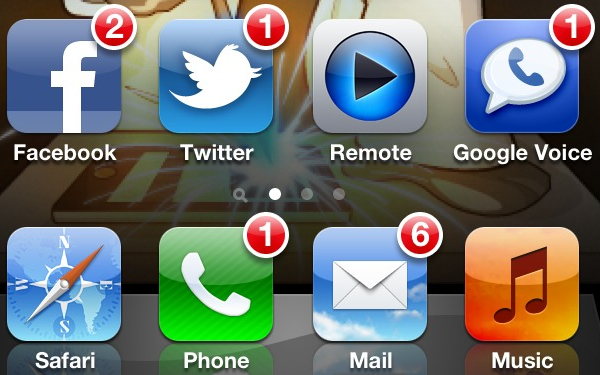
    There was so much to read that I was merely looking. Where in the past I would read an entire article that interested me, and often the Comments Section as well – now I was merely reading the “headlines” and waiting for the next one. If I clicked on an article link, I would barely skim over it and then move on to the next one, as if I was going to miss out on something. For the first time in my life, some articles were too long, even if they were interesting. It became even worse on the smartphone; I would start reading something and all of a sudden this tiny bubble would appear telling me that there were “New Stories” – trained as I am to tap on tiny bubbles, I would forget all about what I was reading and move to a new article. Finally, because I’m always reading about so much interesting stuff, I barely have time to read books anymore. It’s just so much easier, to slide the thumb, than to turn the page.

    A few articles that caught my eye have been discussing the problem of short attention spans of people today – but I can’t seem to remember what they were about or where I read them. But this is not just about Facebook – Facebook is a company that caters to the needs of its customers. It represents the climax of the Information Age. Is the Too-Much-Information Age the anti-climax? If technology exceeds biology, where does that leave the future of learning? If you have read this piece in its entirety, then disagreement is welcome. But till then, I can’t help but wonder if in an attempt to be less ignorant, are we more ignorant than ever?

  • What kind of Journalism?

    10625135_949527191727774_5575061859391548320_n-1728x800_c

    This really began in 2008 when I was working for an up-and-coming television news network in Pakistan – a country which was at the time deeply embroiled in the War on Terror that followed events of 9/11. The nascent status of this news channel was shared by almost all other “independent” news agencies and privately owned television networks at the time; another thing they shared were their journalistic ideals. An unprecedented liberalization of Pakistan’s media industry took place in 2002 with the passing of a number of era-defining media Acts. A wave of new news and other media organizations followed and state monopoly over news production and dissemination finally came to an end. The spot for the nation’s top-news provider was empty for the first time in decades. If state-run channels ran news reports that were uncritical, biased and limited, then the new era of news reporting strived to be the complete opposite – they were going to show/say everything.

    Within a short period journalists had become superstars and people had become citizens. Vying to be first-on-the-spot, first-person reporting from recent terrorist attack sites and global hotspots started becoming a norm for good news reporting. In search for any story that could become news competitive investigative journalism became a thing. Expose pieces about corrupt government officials and lampooning of public figures became and remains common.  Religiously tuning in to watch seasoned analysts unabashedly ripping apart the government and its policies every single night became part of the national culture. And then it happened: In a magic moment of pure irony, one of the top news broadcasters in the country retaliated against the undemocratic government which had made its existence possible in the first place.

    Pervez Musharraf, in keeping with military tradition had come into power through a coup d’état in 1999, but his post-9/11 plan of “Enlightened moderation” in regards to media was more a result of paranoia of Indian propaganda, which runs deep in the nation’s veins since its inception. The paranoia, not completely unfounded, since apart from two full-blown wars, constant military standoff at the borders, as well in Kashmir, and the almost Kargil war of 1999 which had created Musharraf’s in into Presidency are facts, and political leaders on both sides have never really let their respective nations forget either; Indian television channels being broadcasted across borders fiercely reel out a nationalist anti-Pakistan spiel any chance they get – the spicier the better. In a moment of dictatorial desperation, an attempt was made to shut down one of the news headquarters, which only resulted in mobilizing the masses. People from all classes entered the streets, demanded the dictator’s resignation and asked for democratic elections. It was the first time in decades that such a wide-ranging demonstration against a dictator had taken place. And it worked.

    An undeniably powerful moment that signified the ability of mass media to proliferate information through good journalism toward creating an informed and strong citizenry has since been etched in the analytical canals of my brain. But, as history teaches us, no glorious moment of pure will-power can remain unscathed for long, and sooner or later, we are delivered the hand of the human condition. Vietnam syndromes and personal political affiliations work deviously to overpower the personality of the media created mass. Subtle forms of censorship, embedded reporteering, economics of airtime, seriously serious distractions and carefully worded images are gradually slipped in. The clarity of emotion is compromised and invisible filters are created between mass and media.

    For Pakistan: A deeply political and politicized country that has perennially struggled with self-governance and which suffers from an excruciatingly low literacy rate, access to critical and inclusive television news reporting is crucial. Corruption runs deep within its veins where the wealthy, the feudal, are essentially also the political elite. Everything is for sale and nothing is worth anything. News media in Pakistan was never truly free of the politics that rules this country which has the 6th most people in it – even the new “independent” channels were/are essentially owned by the governor of here and the king of there, each with their own political interests and distastes. So while the new media/political elites learn to create better filters by tweeking this report that way, cancelling that show with this person, and while the military disposes off of one, two or three of those nosey journalists, does news media have any power? To that I say a belligerent and optimistic, yes.

    Even if there is no such thing as completely objective and unbiased reporting, especially in Pakistan, where people have a way of not keeping their mouth shut about what they feel, there is still reporting – there is a transfer of information, of a viewpoint, a particular perspective. Then there are also the good eggs in the mix –those journalists who truly are excellent at their jobs. No matter how controlled, contrived or downright comedic journalism becomes, it is uncensored, critical and self-deprecatory. Different channels are owned by different political actors, each with their own agenda – not by one, or two. The day that happens, there will be something to worry about.

    For now, a public space has been created where all these different perspectives are floating around that people actually have access to and can understand. It’s an open space for a country that does not have much to lose and for a people that are open to their faults. It is a better form of journalism than where access to different perspectives is limited and everything sounds the same.  Because if you don’t agree, you can always change the channel.